
AGRICULTURE
Growing sustainability
The Last Farm Before the Fall works to show that farming can help the island feed itself and still pay its way. The project begins in 2026 and will reach its cruising speed in 2027.
What we do
We bring modern permaculture and agroforestry techniques to Kefalonia and adapt them to a Mediterranean mode of growing. Everything is done in polyculture, together with animals, and at a Kefalonian scale — deliberately not industrial. Our market gardening draws on the methods of the Canadian Jean-Martin Fortier, and it all takes place in an environment that is already agricultural. A shared project with Meraki aims to bring the Ainos horse back into the way the farm produces.
We see these methods as a way of making production more resilient: to climate change, to a possible limit on access to water, and to chemical inputs that depend heavily on gas and that we import in bulk. Kefalonia also has little land to spare. The island once hosted as many as 100,000 people and was almost self-sufficient in food. It is up to us to reinvent those know-hows.
Holdings
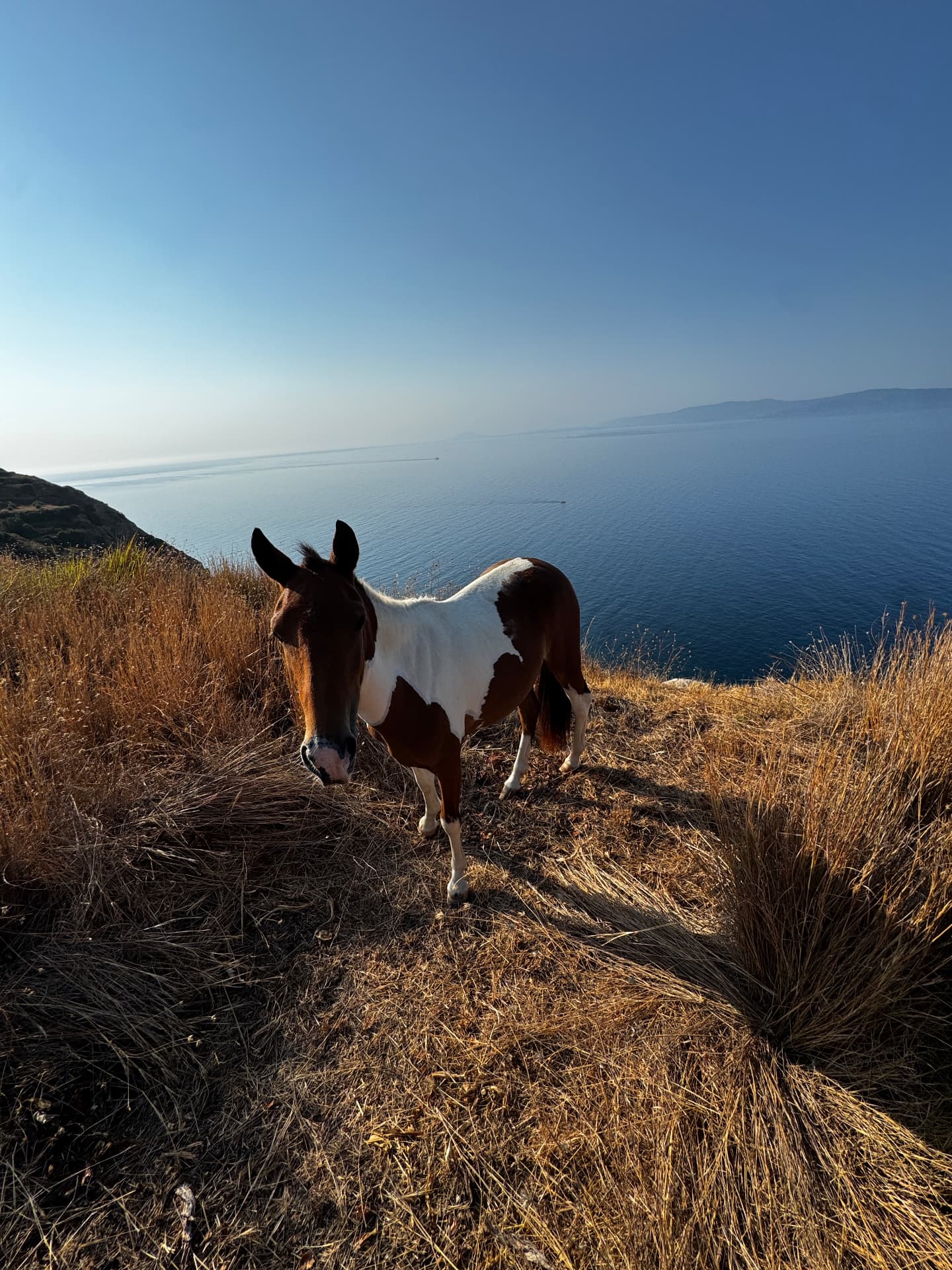
The Last Farm Before the Fall
A working farm in Kefalonia that combines food self-sufficiency for its partner members, agritourism, and the production of jam made in Kefalonia, sold for export. Modern permaculture and agroforestry, adapted to the Mediterranean, are practised in polyculture with animals, at a deliberately Kefalonian, non-industrial scale. The market gardens follow the methods of the Canadian Jean-Martin Fortier, and a joint project with Meraki works to bring the Ainos horse back into production.
- Permaculture and agroforestry, adapted to the Mediterranean
- Polyculture with animals, at a Kefalonian scale
- Market gardening inspired by Jean-Martin Fortier
- With Meraki: the return of the Ainos horse
- Jam made in Kefalonia, sold for export
- Agritourism
- Starting in 2026, at cruising speed in 2027
Other areas
Discuss a project in this area